Late dinner
Tac’s fictional instructions for the staff.
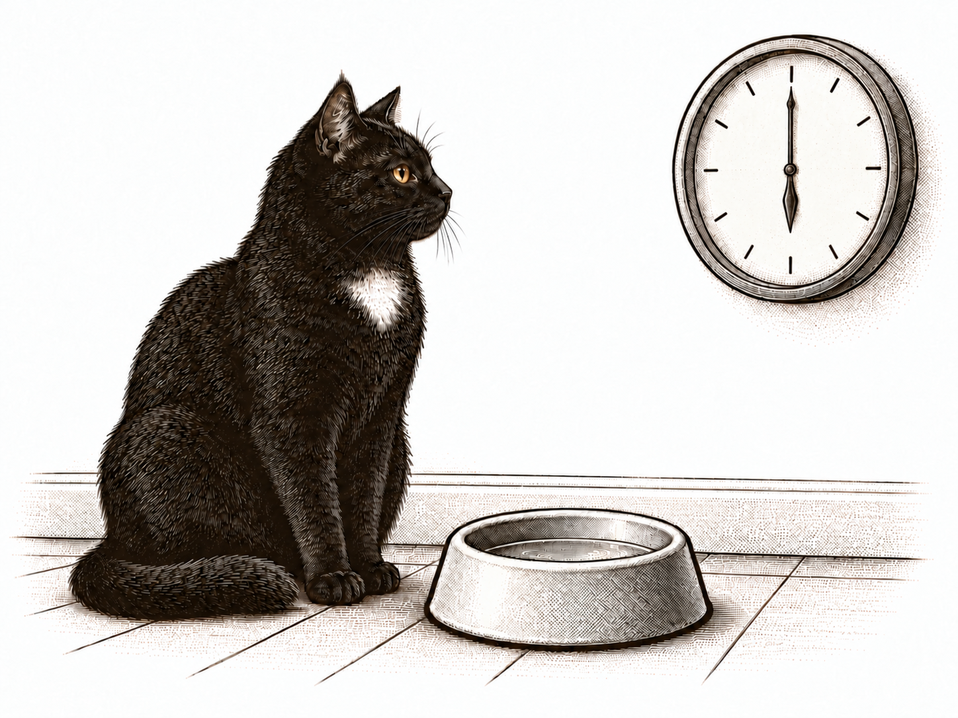
Dinner is late when I am ready for it and it has not arrived.
The staff may use a different method of calculation.
Recognising the signs
I may begin waiting beside my bowl before the usual time.
This is advance notice. The staff should welcome the opportunity to prevent an incident.
Following you into the kitchen does not necessarily mean dinner is late.
Leaving the kitchen without feeding me will clarify the position.
Preparing the service
Check that the bowl is available and the correct food can be found.
Do not begin opening cupboards at random. You put it away.
If a new tin is required, open it before disposing of the previous one. Continuity of service should be maintained.
During a delay
I will remain close enough to monitor progress.
If you move to another room, I may accompany you to ensure the matter has not been forgotten.
“I’m doing it now” should be followed by evidence.
Unacceptable explanations
The staff may report that they were working, speaking on the telephone or asleep.
These activities should be arranged around existing commitments.
The clock changing does not alter my feeding arrangements.
I did not change the clock.
When dinner arrives
Place the bowl in its usual position and step back.
I may inspect the food before eating.
If I walk away, do not remove it. I have waited for dinner. Dinner can now wait for me.
Follow-up
The staff should consider what caused the delay and how to prevent it happening again.
I will bring the next meal forward to allow more time.